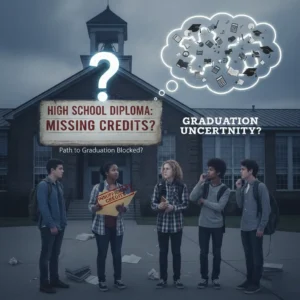


Completing high school is a major milestone, but for many students, missing credits can delay graduation or limit future opportunities. The good news is that missing high school credits do not mean the end of your academic journey. Today, there are multiple flexible, accredited, and accessible ways to earn those credits and move forward no matter your age, location, or situation.

This guide explains how to complete missing high school credits, explores available options, answers common questions, and helps you choose the best path based on your needs.
What Are Missing High School Credits?
High school credits represent successfully completed courses required for graduation. Each school district or education authority sets its own credit requirements, usually across subjects like:
- English / Language Arts
- Mathematics
- Science
- Social Studies
- Electives (Arts, Technology, Physical Education)
If a student fails a course, transfers schools, drops out, or faces personal challenges, they may fall short of the required number of credits resulting in missing high school credits.
Can You Still Graduate With Missing Credits?
Yes. Many students recover credits and earn a diploma through alternative education pathways. Whether you are a teenager, adult learner, working professional, or returning student, there are options designed specifically for credit recovery.
Best Ways to Complete Missing High School Credits
1. Online High Schools (Accredited Programs)
Online high schools are one of the most popular solutions for completing missing credits. These programs allow students to complete coursework remotely, often at their own pace.
Benefits of Online High Schools
- Flexible schedules
- Self-paced learning
- Ideal for working students or parents
- Access from anywhere
- Often accredited and diploma-granting
Who Should Choose This Option?
- Students who need flexibility
- Those who want to graduate faster
- Learners who prefer independent study
Tip: Always verify that the online school is regionally or nationally accredited to ensure credits are accepted by colleges and employers.
2. Credit Recovery Programs
Credit recovery programs are designed for students who failed a specific course and need to retake it without repeating an entire academic year.
How Credit Recovery Works
- Focuses only on failed subjects
- Often shorter than traditional classes
- Available online or in-person
- Can be school-based or independent
Best For:
- Students still enrolled in school
- Teens who failed one or two classes
- Fast-track graduation candidates
3. Adult Education Programs
Adult education programs are specifically designed for individuals who left school early or need to complete their education later in life.
Key Features
- Evening or weekend classes
- Online and in-person options
- Supportive learning environment
- May lead to a high school diploma or equivalent
Ideal For:
- Adults over 18
- Working professionals
- Parents returning to education
4. GED or High School Equivalency Programs
Instead of earning individual credits, some students choose a GED (General Educational Development) or equivalent credential.
GED Overview
- Tests knowledge equivalent to high school level
- Faster than completing multiple courses
- Accepted by many employers and colleges
Consider This If:
- You are significantly behind on credits
- You want a faster alternative
- You are over traditional high school age
Some colleges or employers may prefer a high school diploma, so check requirements first.
5. Summer School & Evening Classes
Traditional schools often offer summer school or after-hours classes for students who need to recover credits.

Advantages
- Familiar school structure
- Teacher-led instruction
- Good for younger students
Limitations
- Fixed schedules
- Limited course availability
6. Homeschool Credit Completion (Where Allowed)
In some regions, homeschooling programs allow students to complete missing credits under parental supervision or through approved curricula.
Pros
- Highly personalized learning
- Flexible pace
- Can be combined with online courses
Cons
- Must follow local education laws
- Credits may need validation
How Long Does It Take to Complete Missing Credits?
The time required depends on:
- Number of missing credits
- Learning pace
- Program type
- Daily study time
Typical Timeframes
- 1–2 credits: A few weeks to 3 months
- Multiple credits: 6–12 months
- GED route: 2–6 months (average)
Some online schools allow motivated students to finish faster.
Are Online High School Credits Legitimate?
Yes if the school is accredited.
What Accreditation Means
Accreditation ensures the institution meets educational standards recognized by:
- Colleges
- Universities
- Employers
- Education authorities
Before enrolling:
✔ Check accreditation status
✔ Verify credit transferability
✔ Confirm diploma recognition
Frequently Asked Questions
Can adults go back to finish high school credits?
Yes. Adult education, online schools, and GED programs are designed specifically for adult learners.
Can I finish high school credits online?
Yes. Accredited online high schools offer flexible, self-paced credit completion.
What is the fastest way to recover credits?
Credit recovery programs and online self-paced courses are typically the fastest.
Are online diplomas accepted by colleges?
Yes, if the school is accredited. Always confirm acceptance with the institution.
Choosing the Right Option for You
Ask yourself:
- How many credits am I missing?
- Do I need flexibility?
- Do I prefer structured learning?
- Am I aiming for college or employment?
- Do I need an accredited diploma?
Matching your goals with the right program ensures success.
Conclusion
Missing high school credits may feel overwhelming, but today’s education system offers more flexible solutions than ever before. Whether you choose an online high school, credit recovery program, adult education class, or GED pathway, completing your education is absolutely achievable.
With determination, the right program, and a clear plan, you can finish your high school education and open doors to better career and academic opportunities.